There’s a shift happening in professional wardrobes across the country. The towering stiletto — long held up as the symbol of corporate authority — is quietly making way for something more considered. Low heels, specifically those sitting in the 1–2-inch range, are becoming the footwear of choice for women who move through demanding workdays with intention.
This is not merely a trend of comfort. It’s a deliberate statement — one that mixes ergonomic intelligence, the changing culture of the workplace, and a deeper understanding of what authority really means in professional life today.

The psychology of fashion says that our clothes speak before we do. High heels have long been associated with power, but their association is always complicated by what they also signal: effort, fragility and physical constraint.
Low heels occupy a different psychological space entirely. They say: I’m grounded. I’m here to work. I’m not performing authority — I’m exercising it.
Research from embodied cognition supports this. When footwear allows a stable, natural gait — as low heels do — posture improves, movement becomes more purposeful, and the physical confidence that follows is structural, not superficial.
Women who wear this style in professional settings often describe a specific ease: the ability to walk into a boardroom without calculating the floor, to pivot quickly between commitments, and to stay focused on the conversation rather than managing discomfort.
Corporate dress codes have changed significantly over the past decade. Formality has become more fluid, and ‘professional’ no longer means rigid. What it does mean is polished, intentional, and contextually appropriate.
In that environment, a refined pair of low heels makes a great deal of sense. A well-chosen block heel in a neutral tone reads as sharp and considered without the performative edge of a stiletto. Versatile enough for client presentations, site visits, and team meetings, this category of footwear works across contexts in a way that very few styles manage.
The rise of hybrid working has reinforced this. When professionals move between home, office, and client-facing settings in a single day, well-made shoes that transition without sacrificing polish become genuinely practical. A lower heel offers exactly that versatility.

The biomechanical case for low heels in a professional setting is well established. High-heeled styles shift weight forward to the ball of the foot, increasing the pressure on the forefoot and changing the natural alignment of the ankle, knee and lower back. This misalignment adds up over a long day at work.
A 1–2-inch lift — especially in a block heel — distributes weight more evenly. The slight elevation supports the arch without forcing the foot into an unnatural pitch. Podiatric guidelines generally identify this height range as the one that offers postural lift while minimising strain on the Achilles tendon and metatarsals.
Professionals are especially fond of the ergonomic advantages of block heels. A wide base greatly diminishes the lateral wobble of tapered styles, meaning less muscle fatigue and a more confident stride over longer days. The practical payoff: You finish a hard day’s agenda in better shape and with more energy for what’s really important.
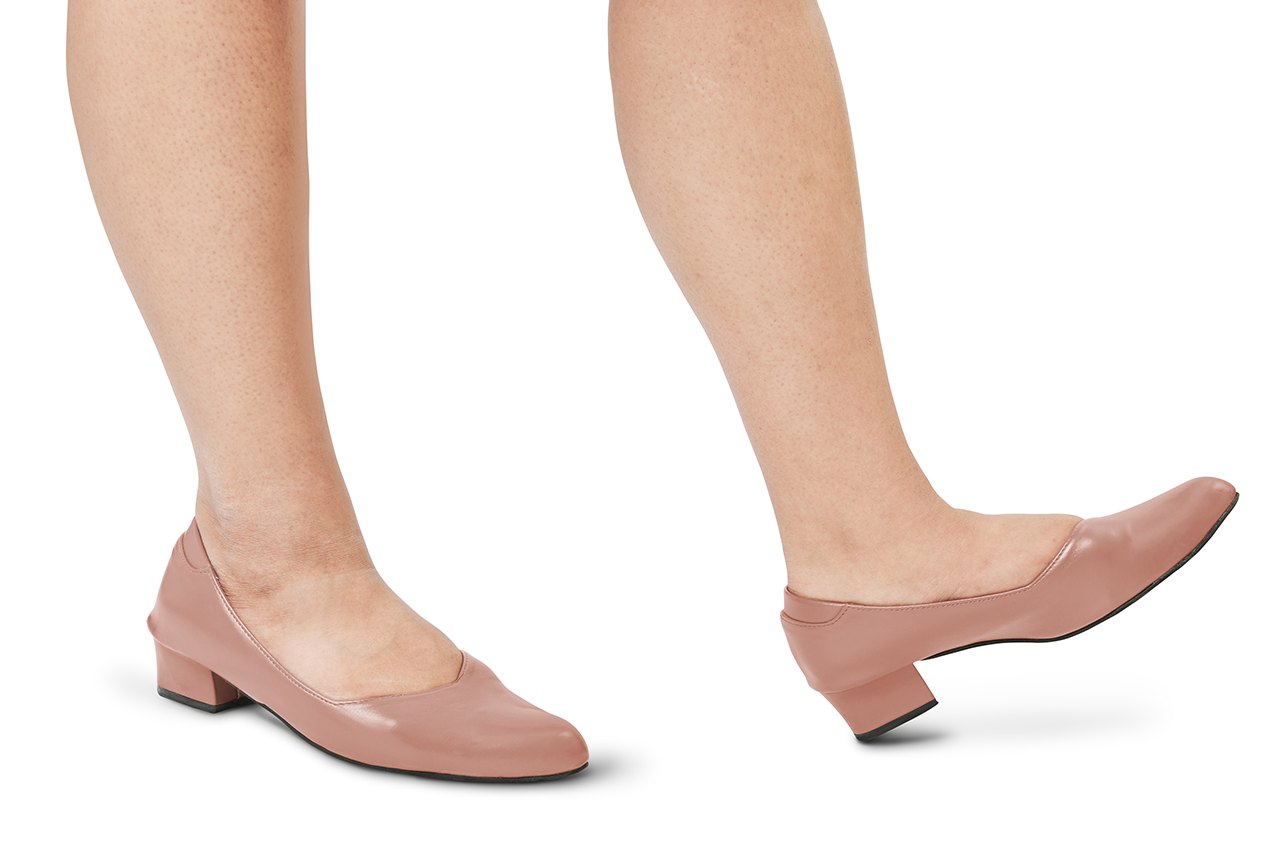
The strongest argument for low heels as a must-have for the professional wardrobe is their versatility. They can be dressed up or down without losing authority, and reliably pair with the tailored pieces that form the backbone of most work wardrobes.
A pointed-toe style in black or tan works across trousers, midi skirts, and structured dresses. Block heels in muted tones — stone, camel, navy — add a grounded, contemporary quality to outfits that might otherwise lean too casual. Mule styles have also found a strong place in modern workwear, particularly in creative industries.
Proportion is the common thread of these choices. A good pair of shoes holds an outfit together, rather than fights it. The visual effect is one of completeness not effort—which is exactly the impression most professional women are going for.
The heel width should also be taken into consideration when selecting footwear for the workplace. A quality leather upper on a well-built low heel speaks something different than a thin wedge or a bulky platform. It feels intentional and considered and right.
There’s a broader cultural conversation worth naming here. The idea that authority requires physical discomfort — that a professional woman must choose between looking powerful and feeling capable — is one that many working women are no longer willing to accept.
Low heels sit at the centre of that refusal. They are not a concession. They are not the ‘sensible’ option chosen reluctantly. They are a deliberate selection by women who understand that authority is expressed through presence, capability, and clarity — not height.
When your shoes allow you to walk confidently, think clearly, and stay comfortable through a full day’s work, your performance speaks for itself. Not a compromise, but a correction.
Not all low heels are created equal, and when it comes to using them for work it pays to be picky. Some things to consider:
Investing in one or two well-made pairs will serve a professional wardrobe far better than owning several cheaper options. Quality construction is visible — and in professional settings, that visibility counts.

The professional woman’s relationship with footwear has always been more complicated than it needed to be. Low heels are, in many ways, the clearest answer to that complication — shoes that earn their place through performance rather than posturing.
If you’re building or refining a professional wardrobe and want footwear that supports the kind of workday you actually have, the 1–2-inch range is worth exploring seriously. The right pair won’t slow you down. They’ll move with you.
Browse The Shoe Haven’s curated range of low heels to find your next professional staple.